Přejít k obsahu

If you have ever seen one of their displays, you will not easily forget the Red Arrows!
As they streak across the sky at speeds close to a thousand kilometres per hour, often with less than two metres between each aircraft, trailing their trademark coloured smoke, most people are left wondering how on Earth they do it.
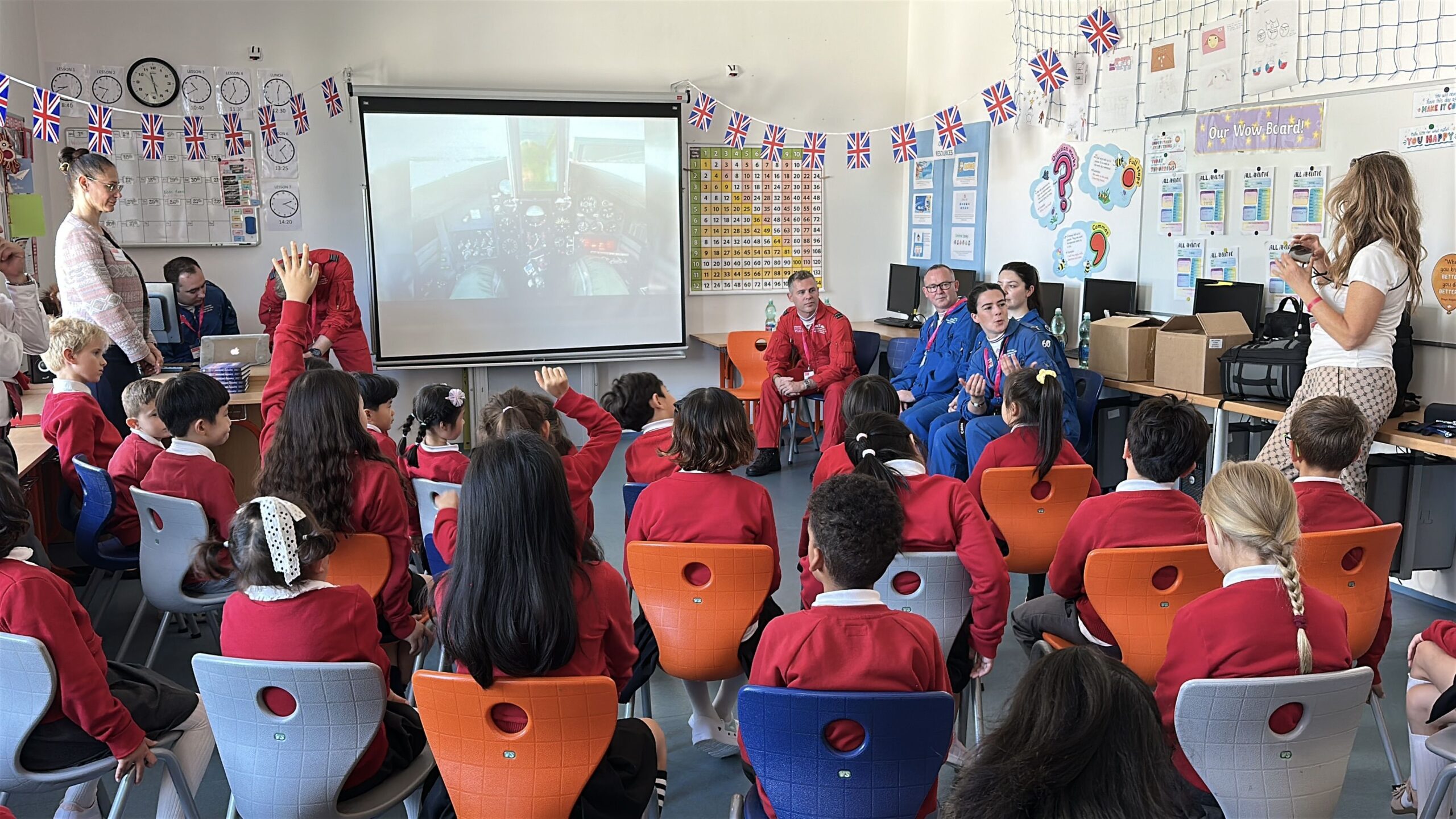
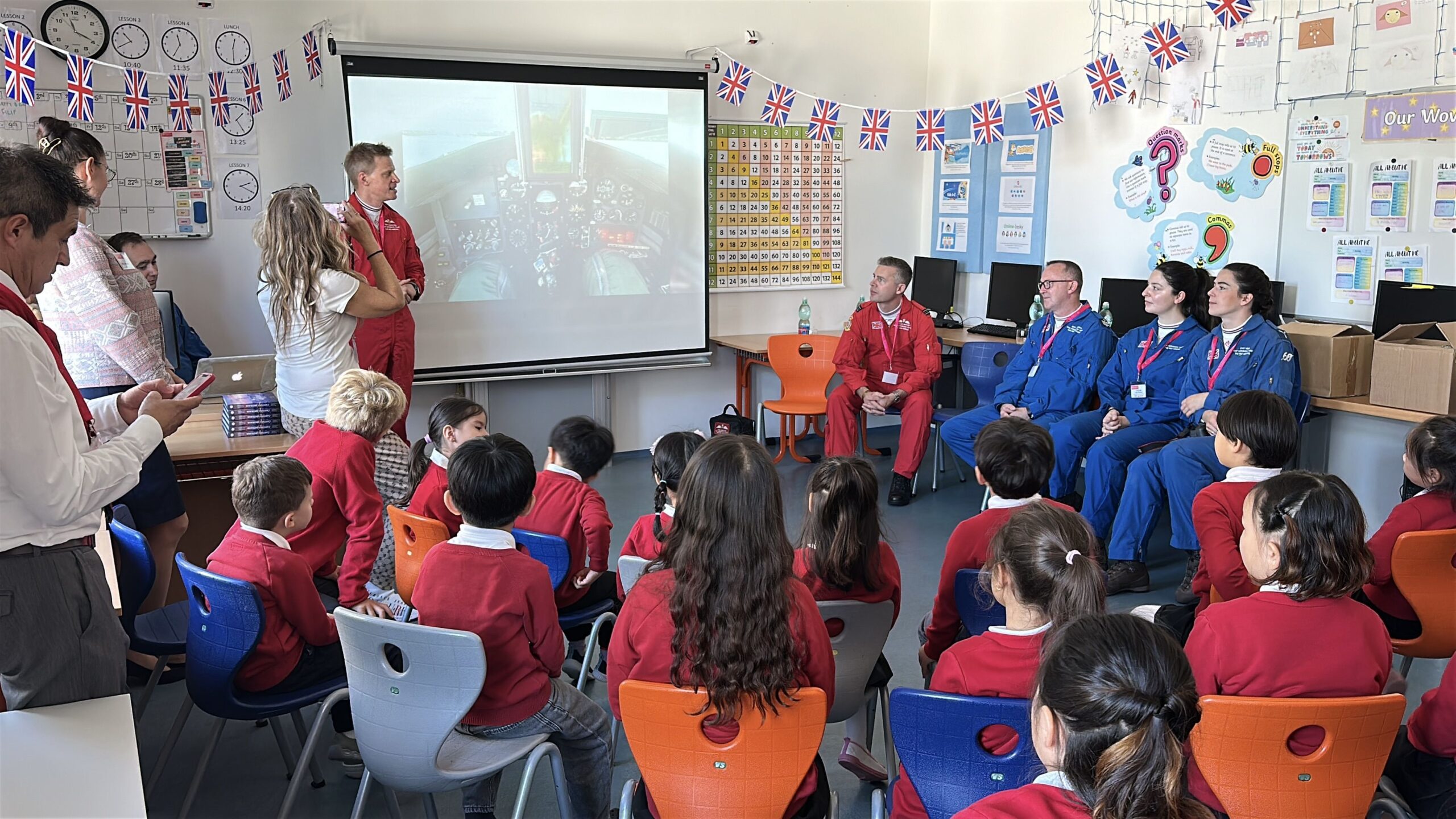
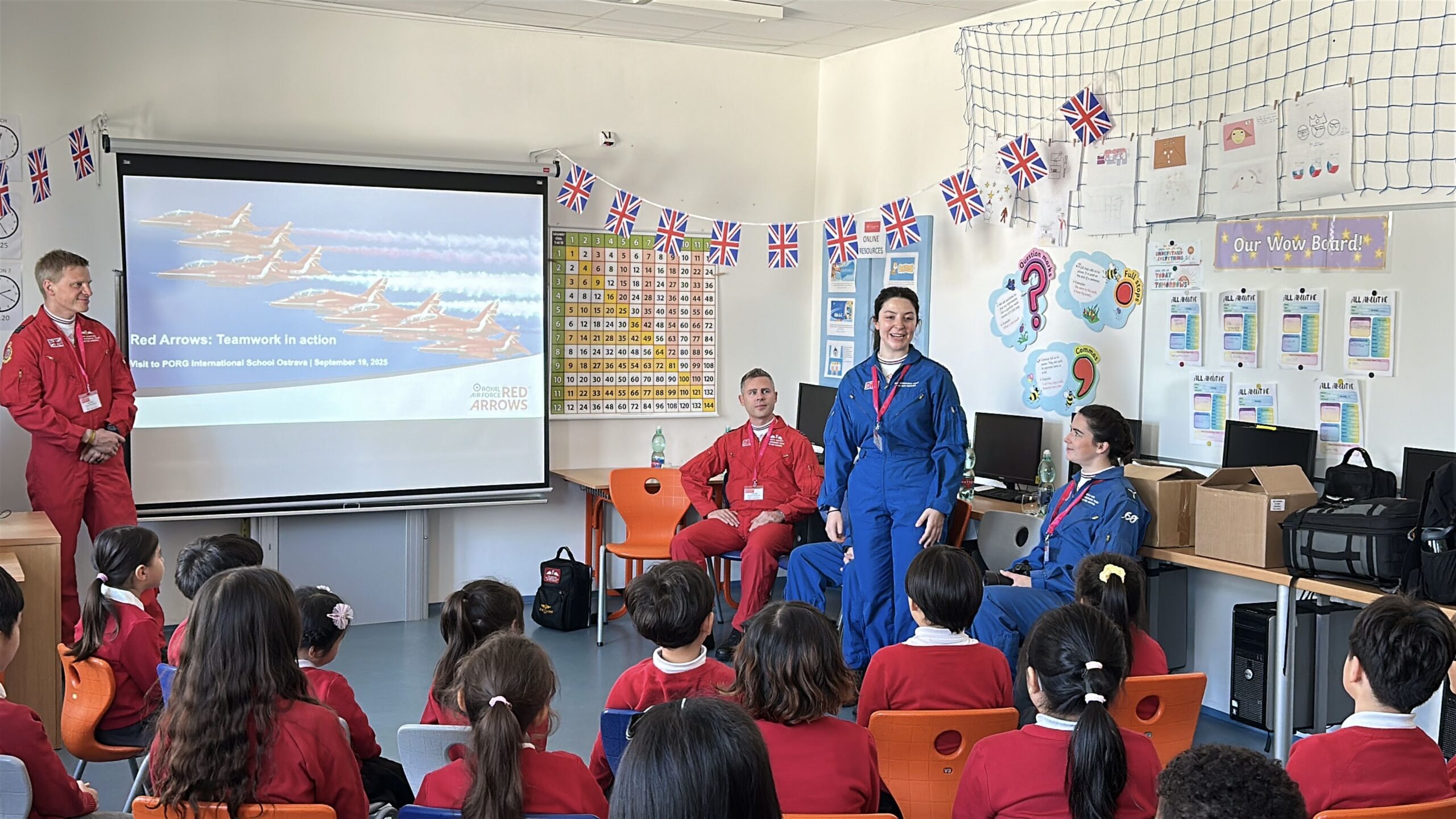
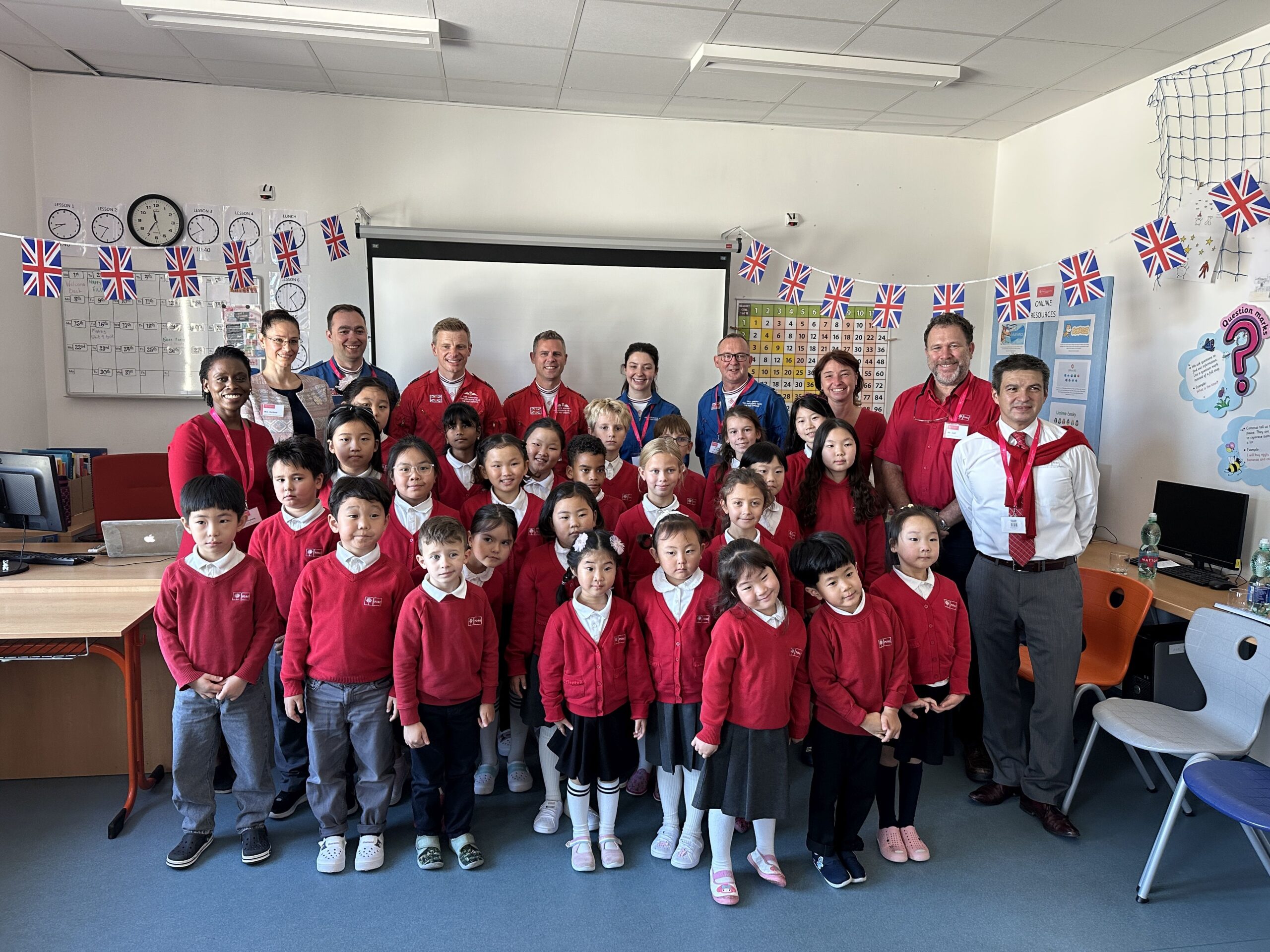
It was therefore a huge honour for us to welcome some of their team to our school to answer that question!

Their secret is teamwork, dedication, long hours of training and constantly evaluating what they do to look for ways to improve. It sounds simple when put like that, but we had a unique opportunity to hear how they do it and ask them about their experience.
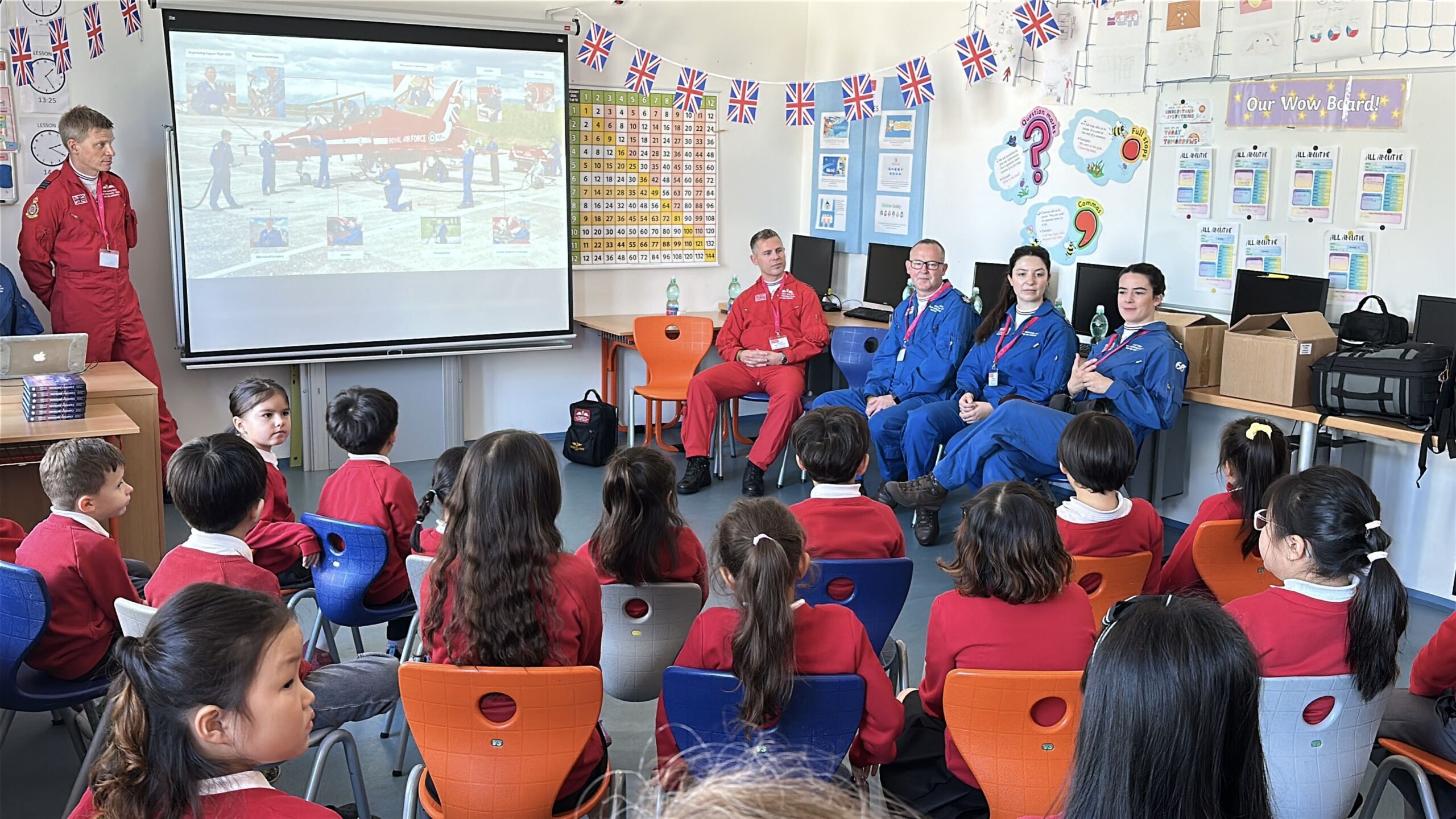
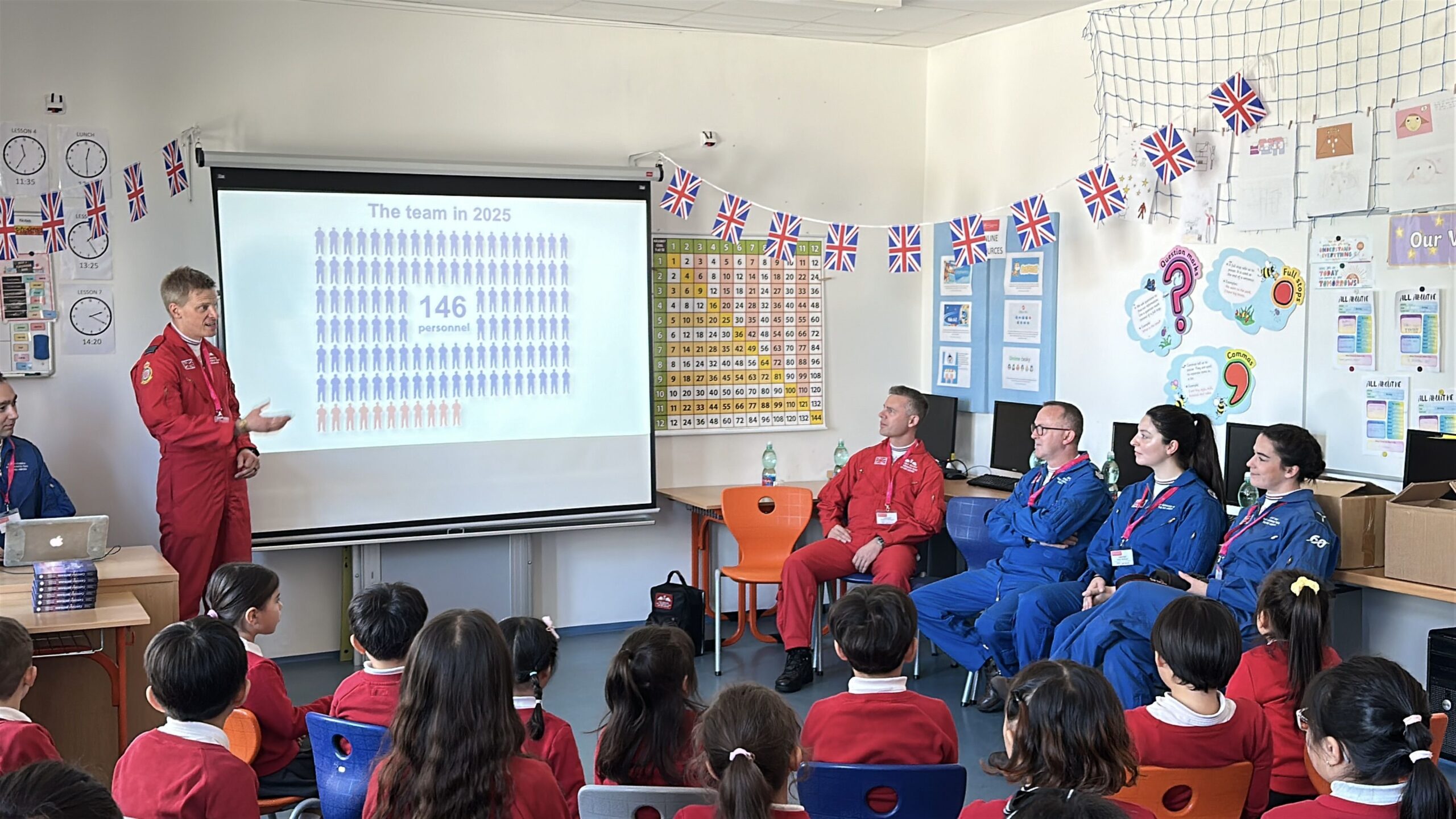
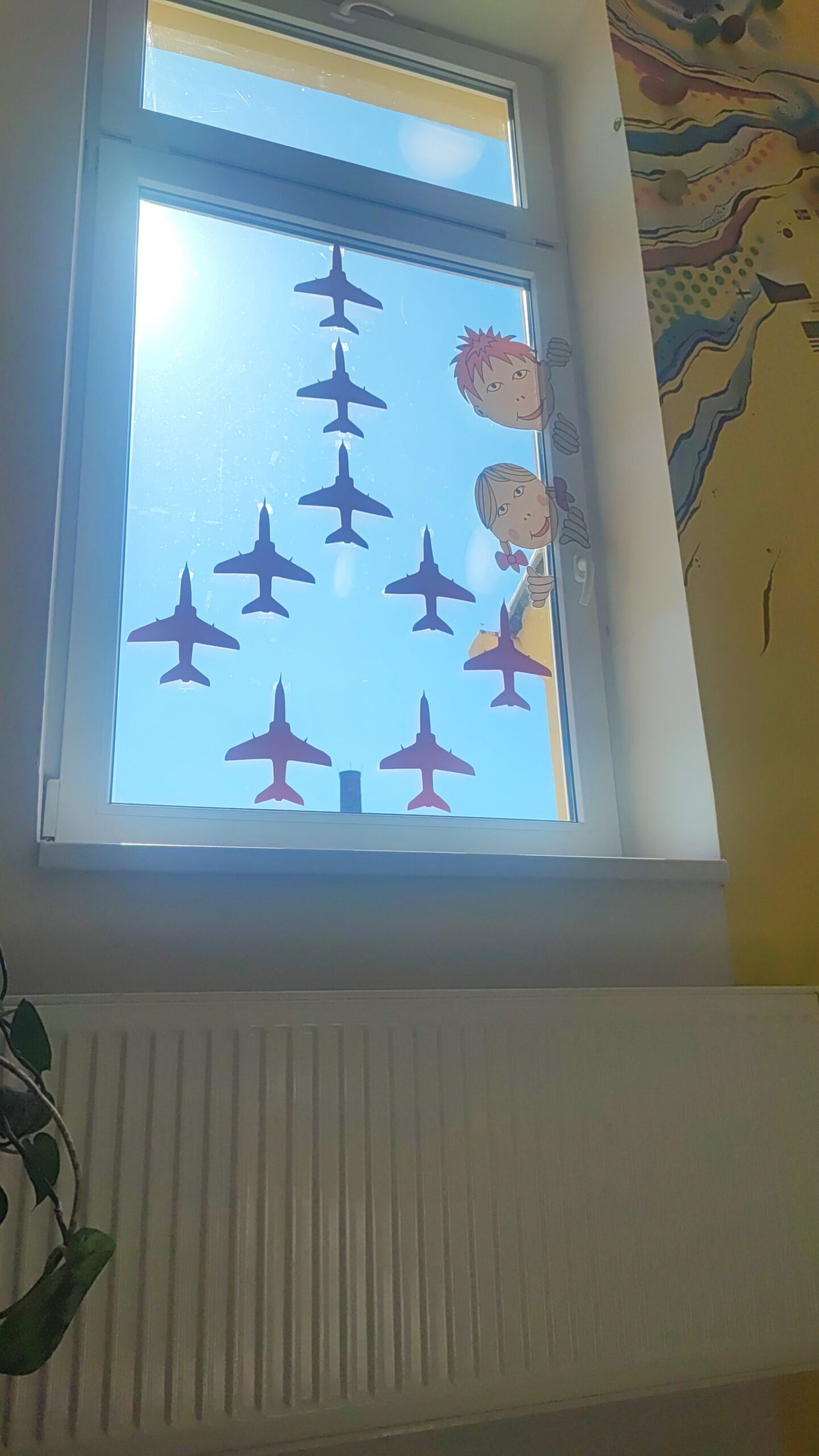
The first thing they impressed upon us was that, although they are famous for flying nine aircraft, it takes almost a hundred and fifty highly trained team members to do it!
Without the specialists in mechanics, electronics, chemical compounds, fuel, transport, logistics, navigation, safety systems, survival equipment and photography, they would never get off the ground.
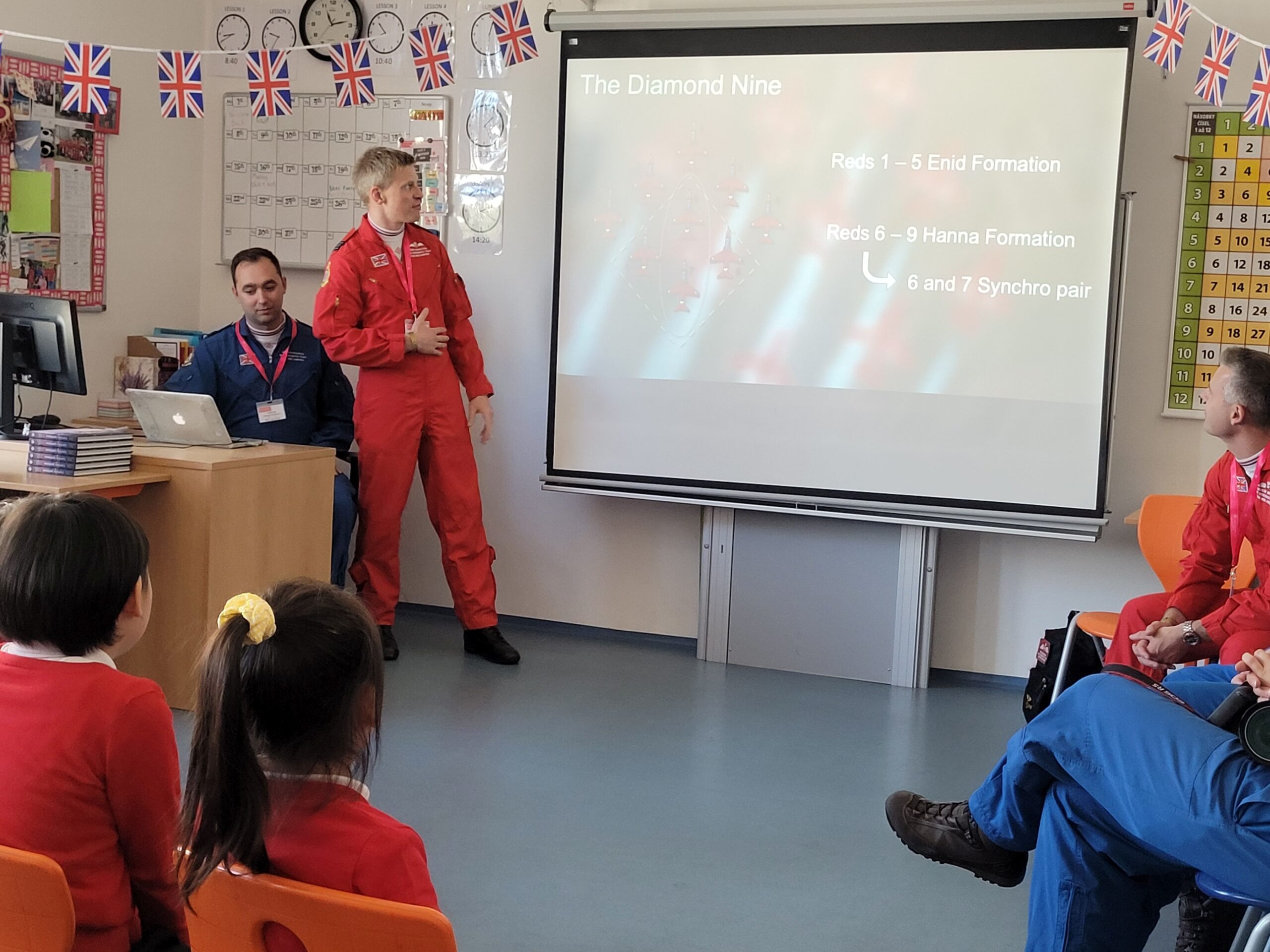
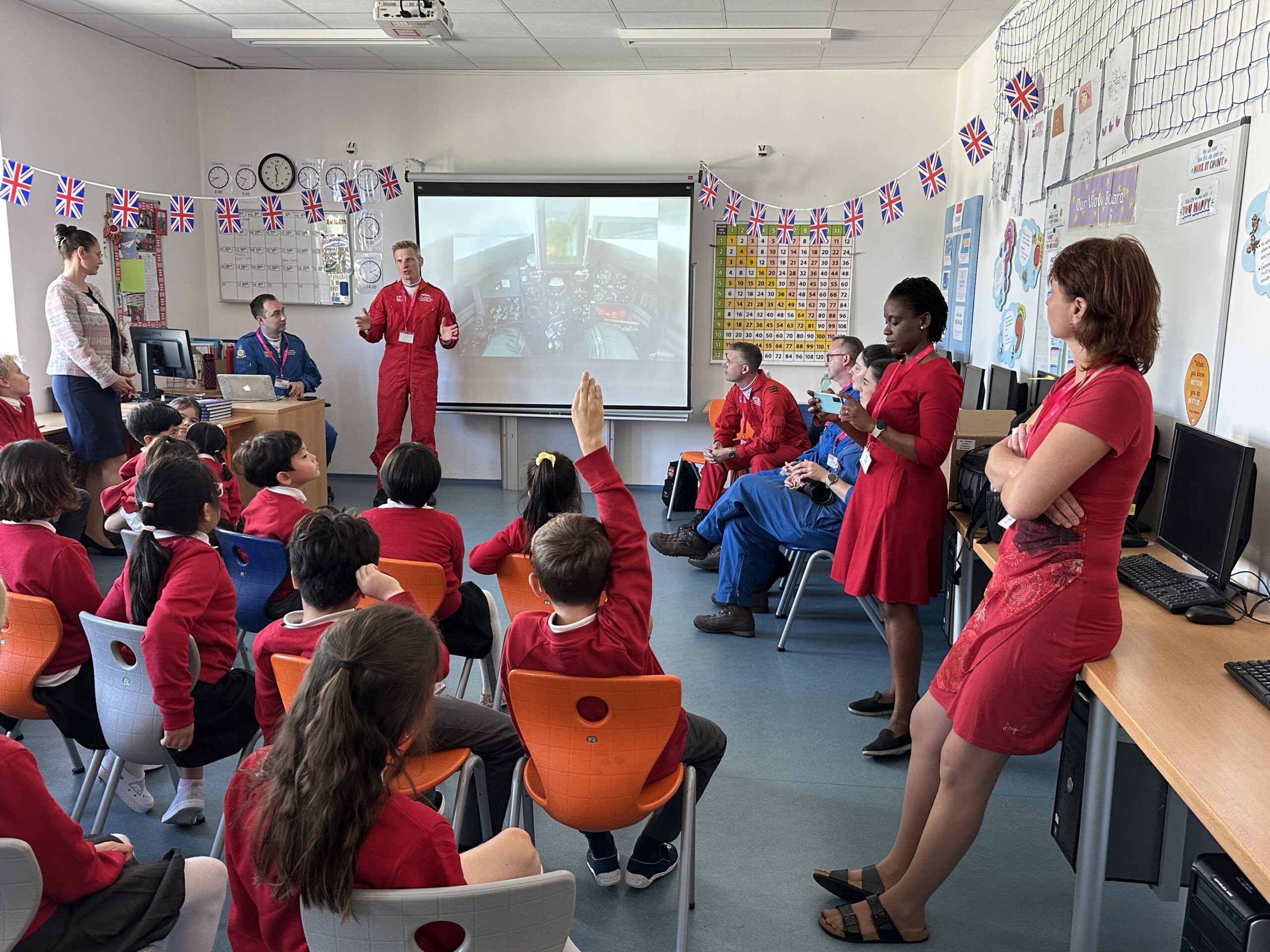
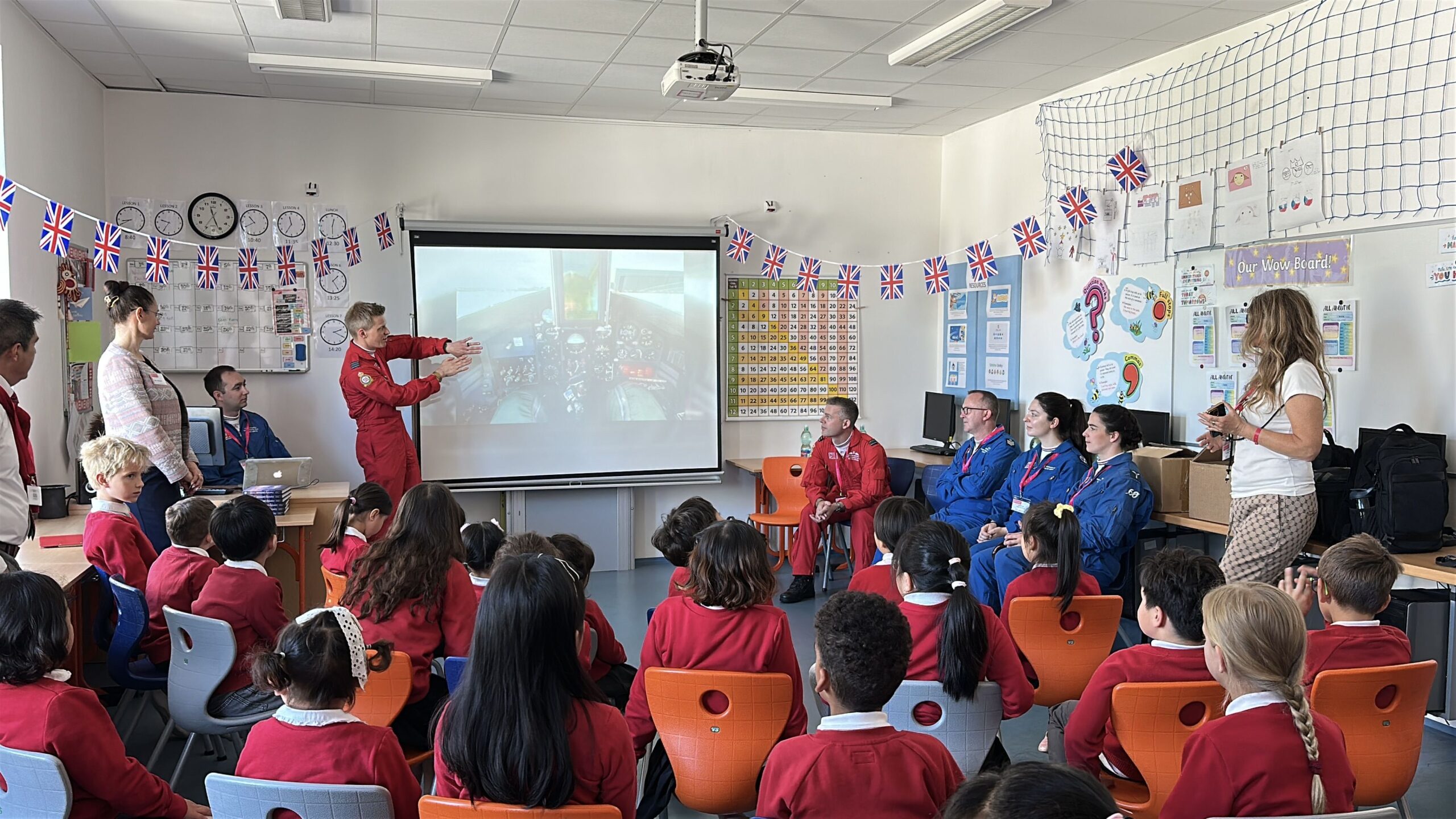
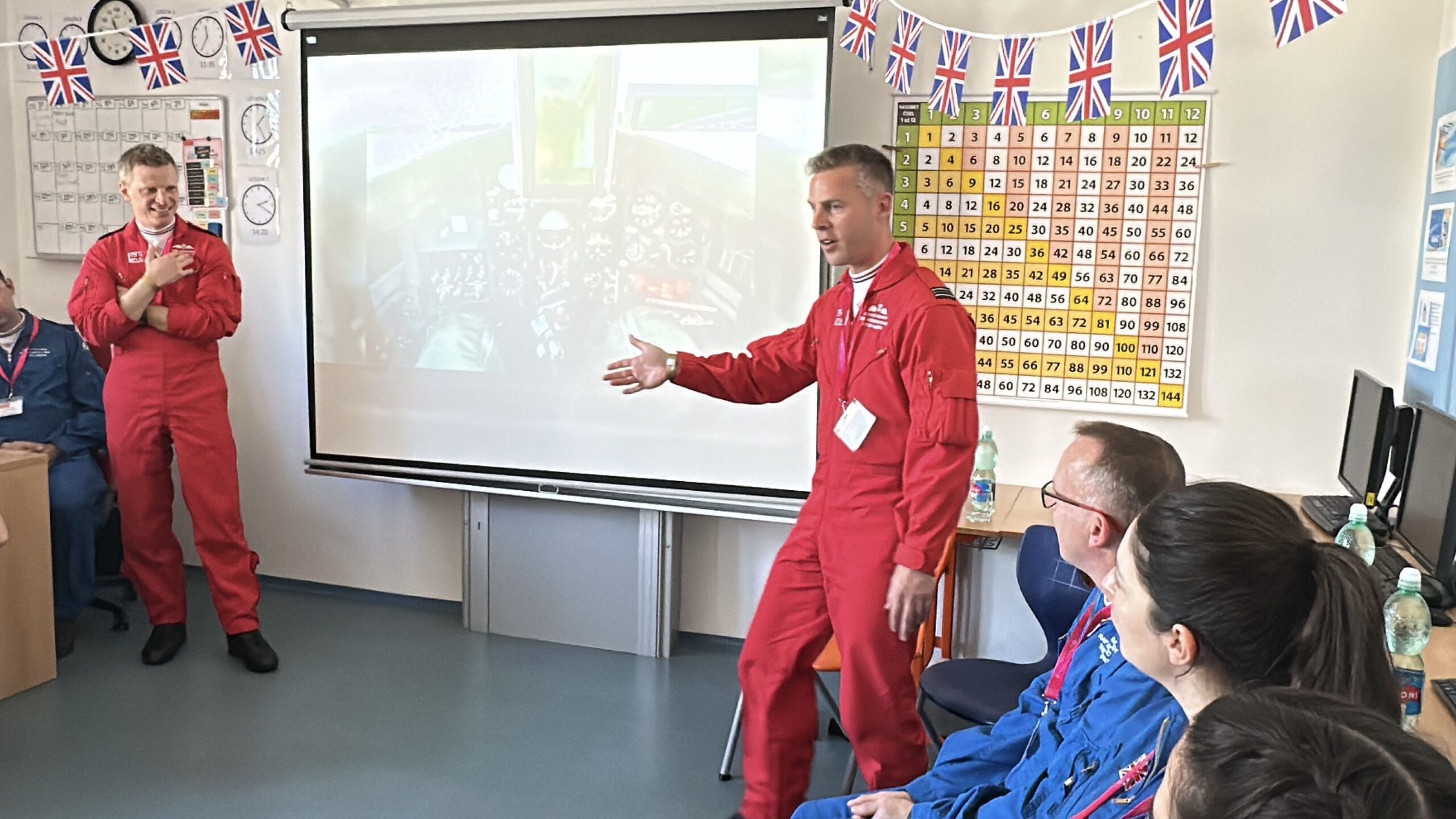
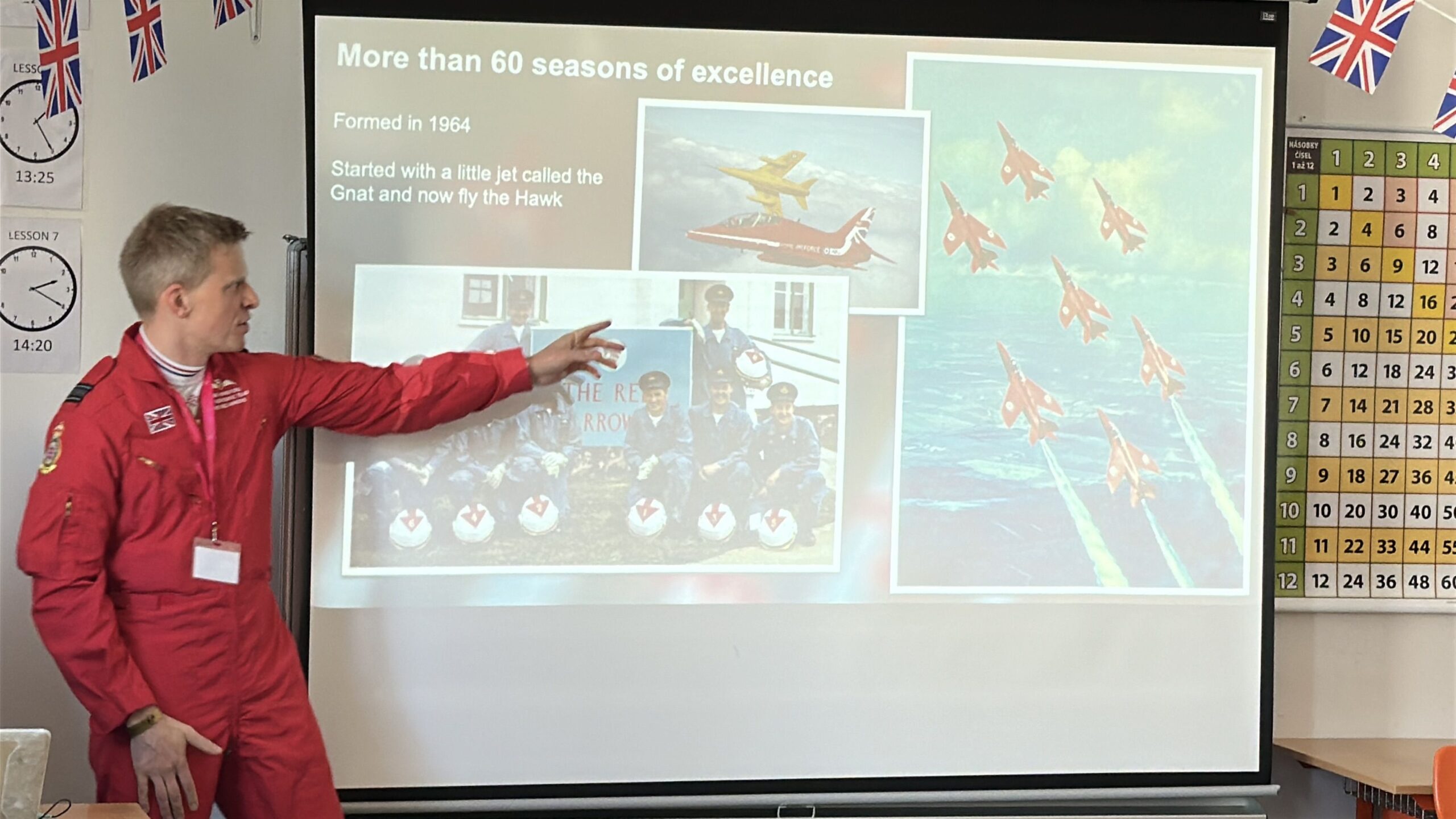
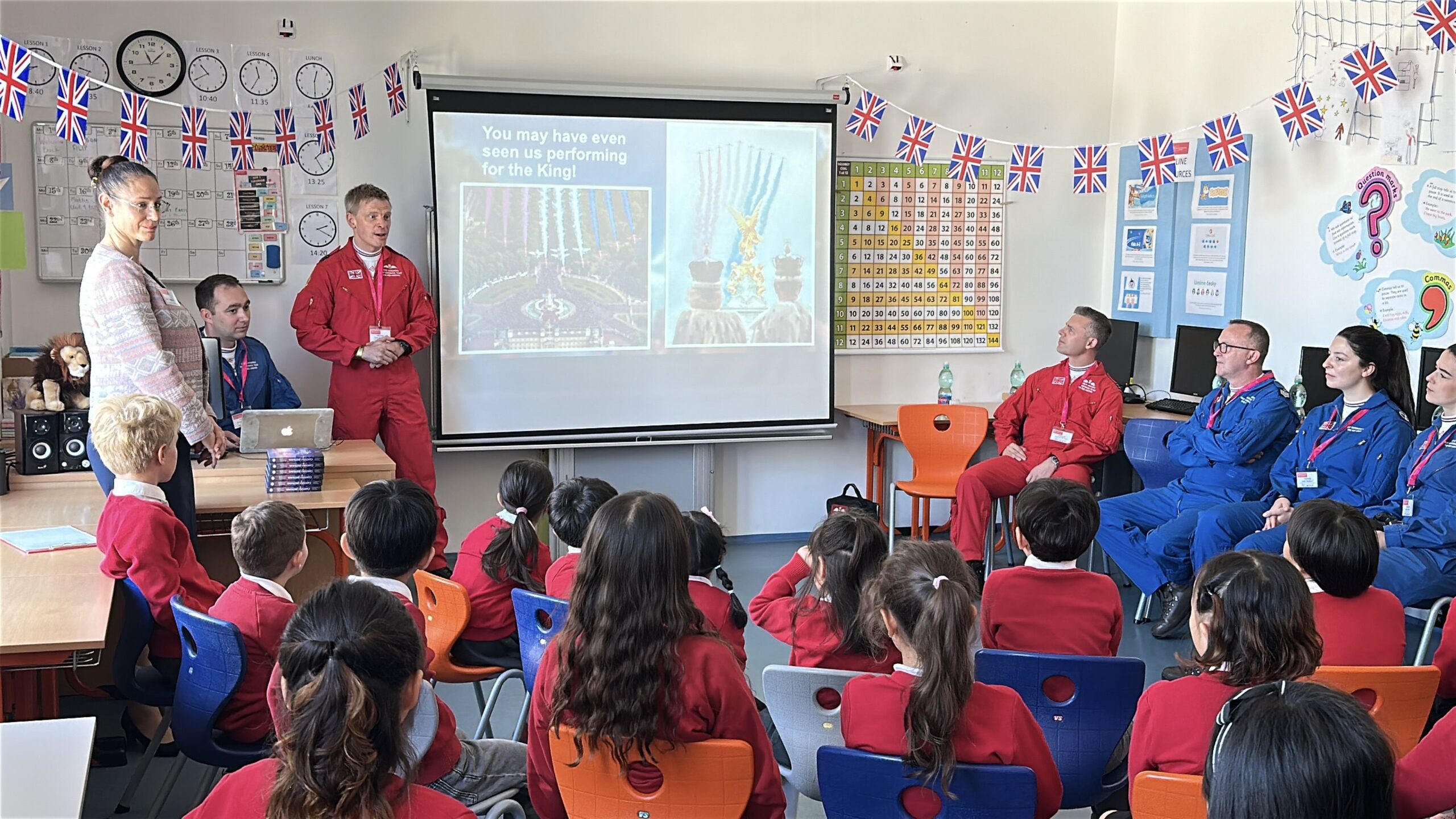
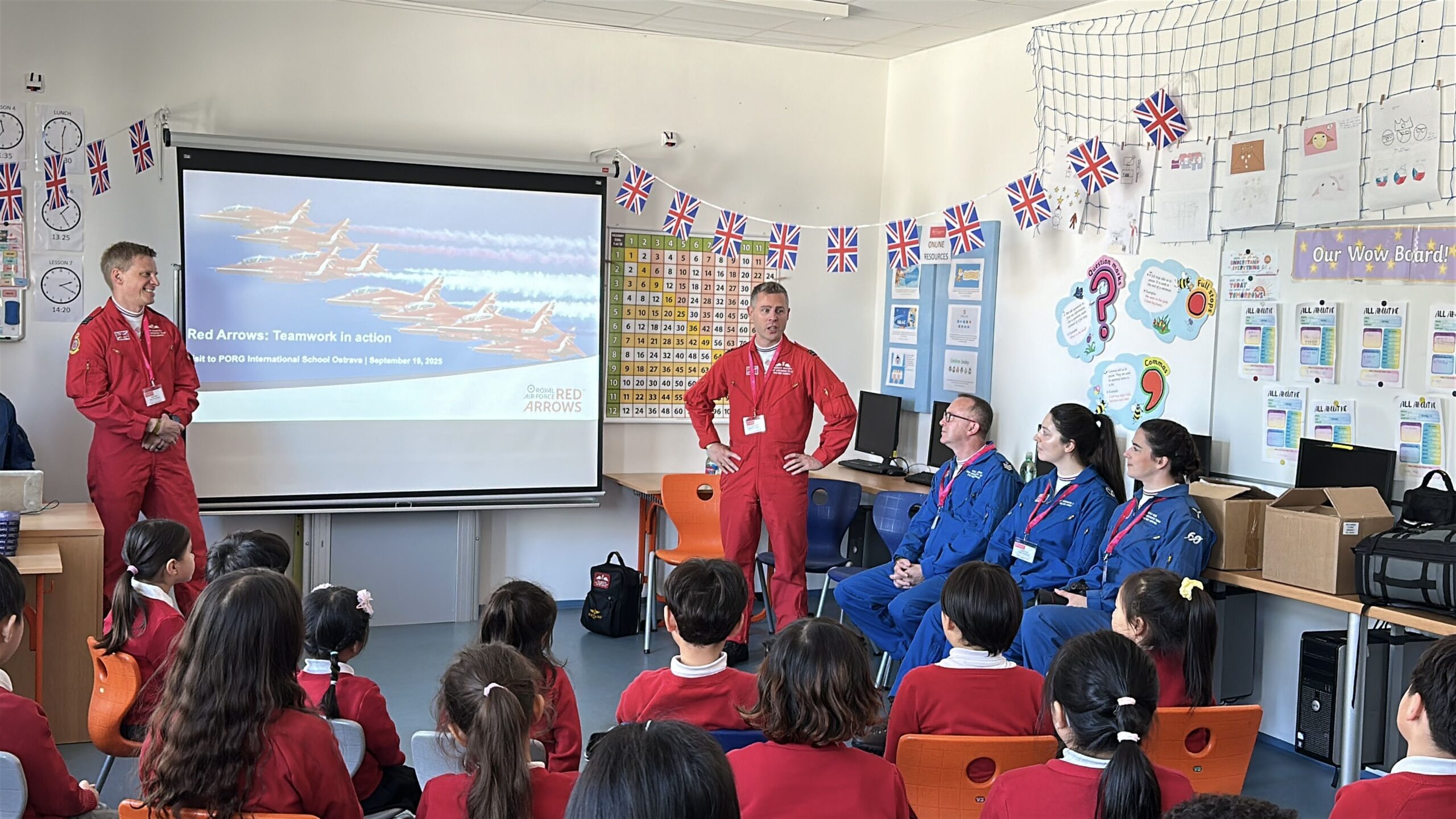
As well as being expert pilots, our presenters were experts at capturing the children’s attention too. In their distinctive red flight suits, Squadron Leader Tom Hansford (Red 6) and Flight Lieutenant Andrew McEwan (Red 3), took us on a fascinating journey behind the scenes to see what makes the Red Arrows so special.
Even before they can apply for the team, a pilot must have at least 1500 hours‘ experience flying fast jet aircraft – that’s like spending 62 and a half days flying non-stop! On top of that, they have to get above average grades in their regular flying exams. When you consider that they are already among the best, most experienced military pilots in the world, being ‚above average‘ means something quite exceptional.
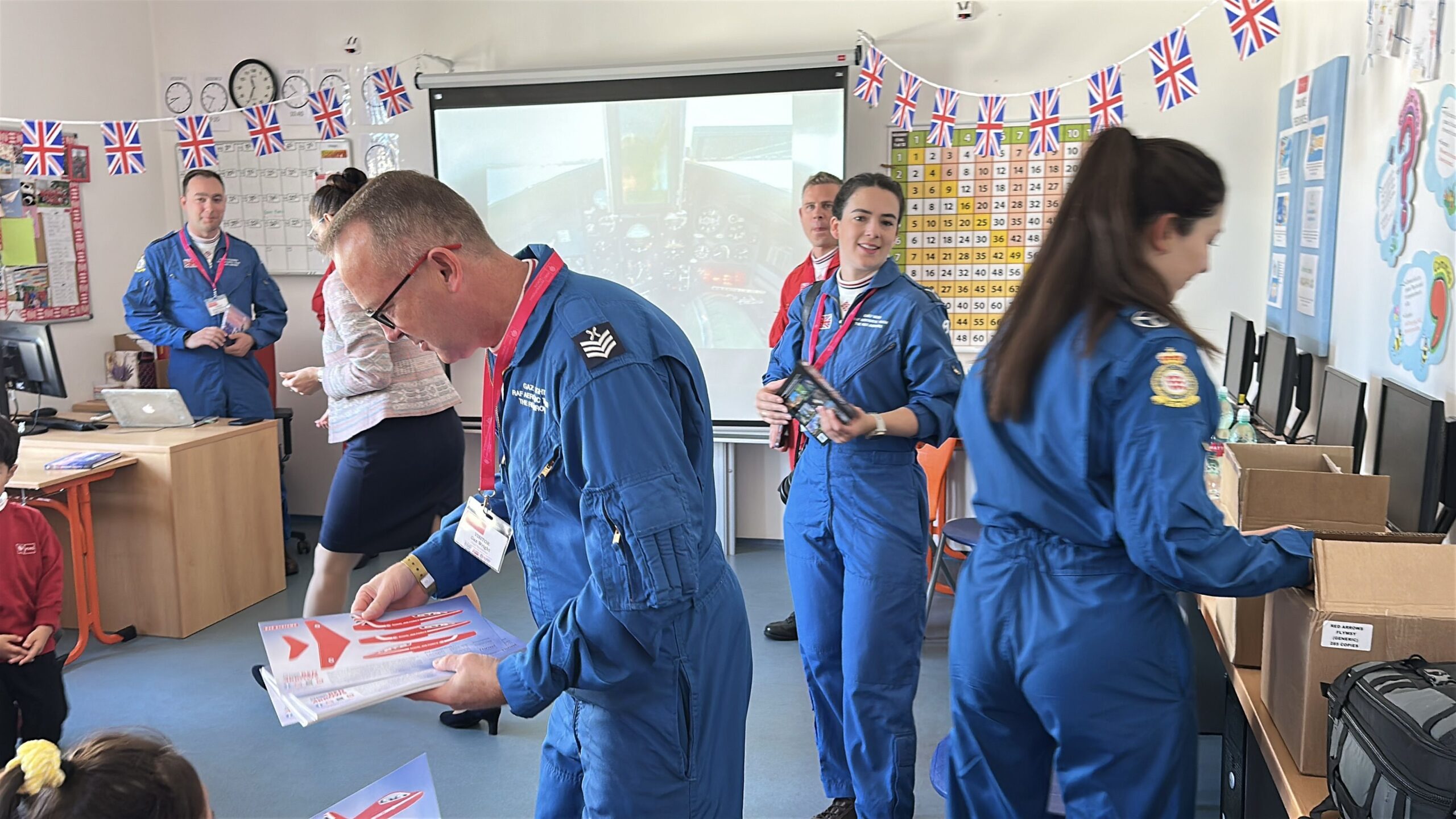
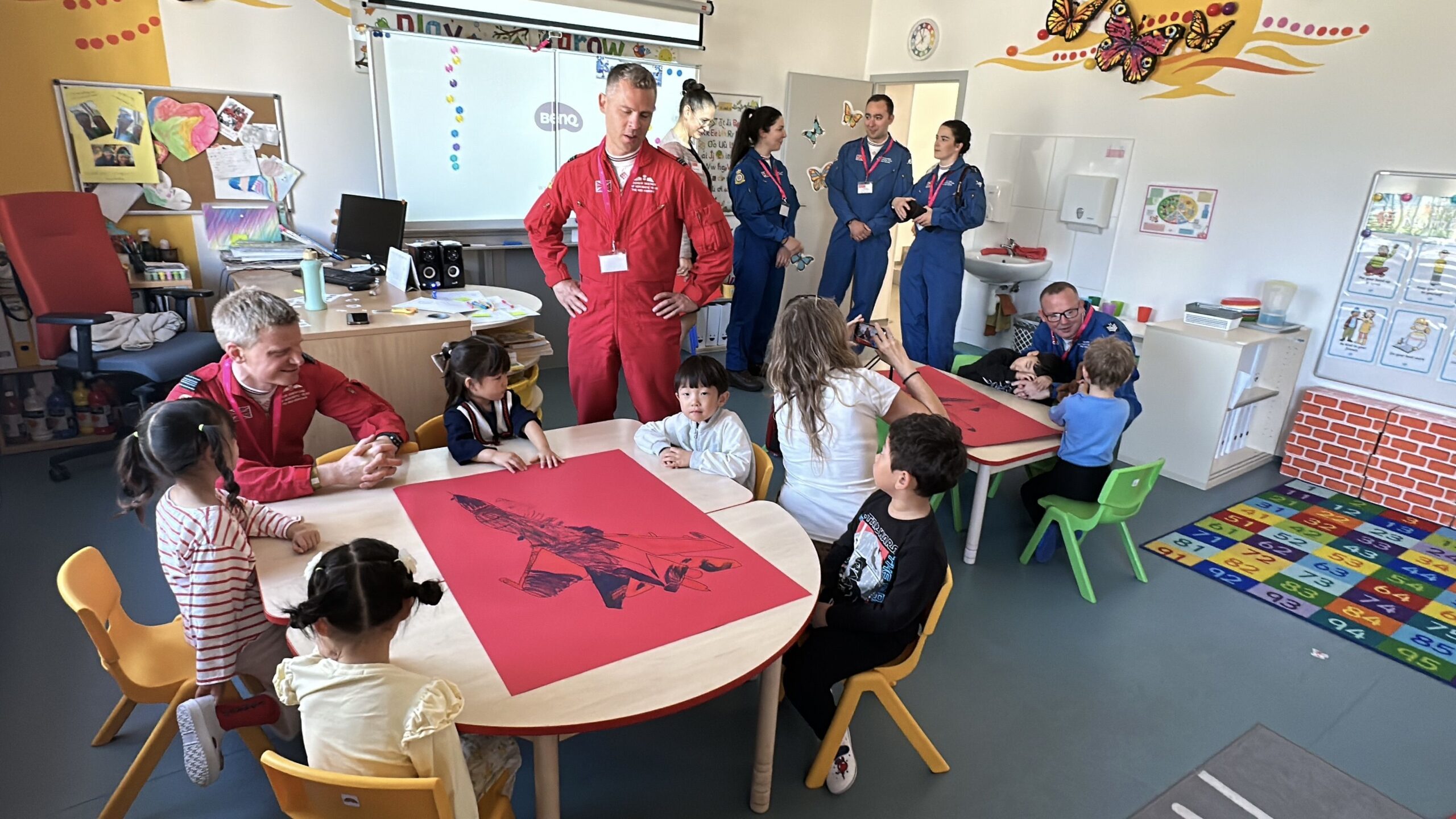
Pilots are just the tip of the iceberg when it comes to careers in the Royal Air Force though. The ‚Reds‘ – the pilots in their red flight suits, are supported by the ‚Blues‘, who are the technical ground crews in their blue flight suits. We were given a rare insight into how what we learn at school can lead to a lifetime of doing something you love.

Red 6 and Red 3 were supported by Flight Lieutenant Joseph McKenna, who had thought of becoming a teacher before deciding to join the Royal Air Force. We also heard about the aircraft safety systems from Chief Technician Gaz Wright, a specialist in weapons, explosives and the aircraft ejection seats.
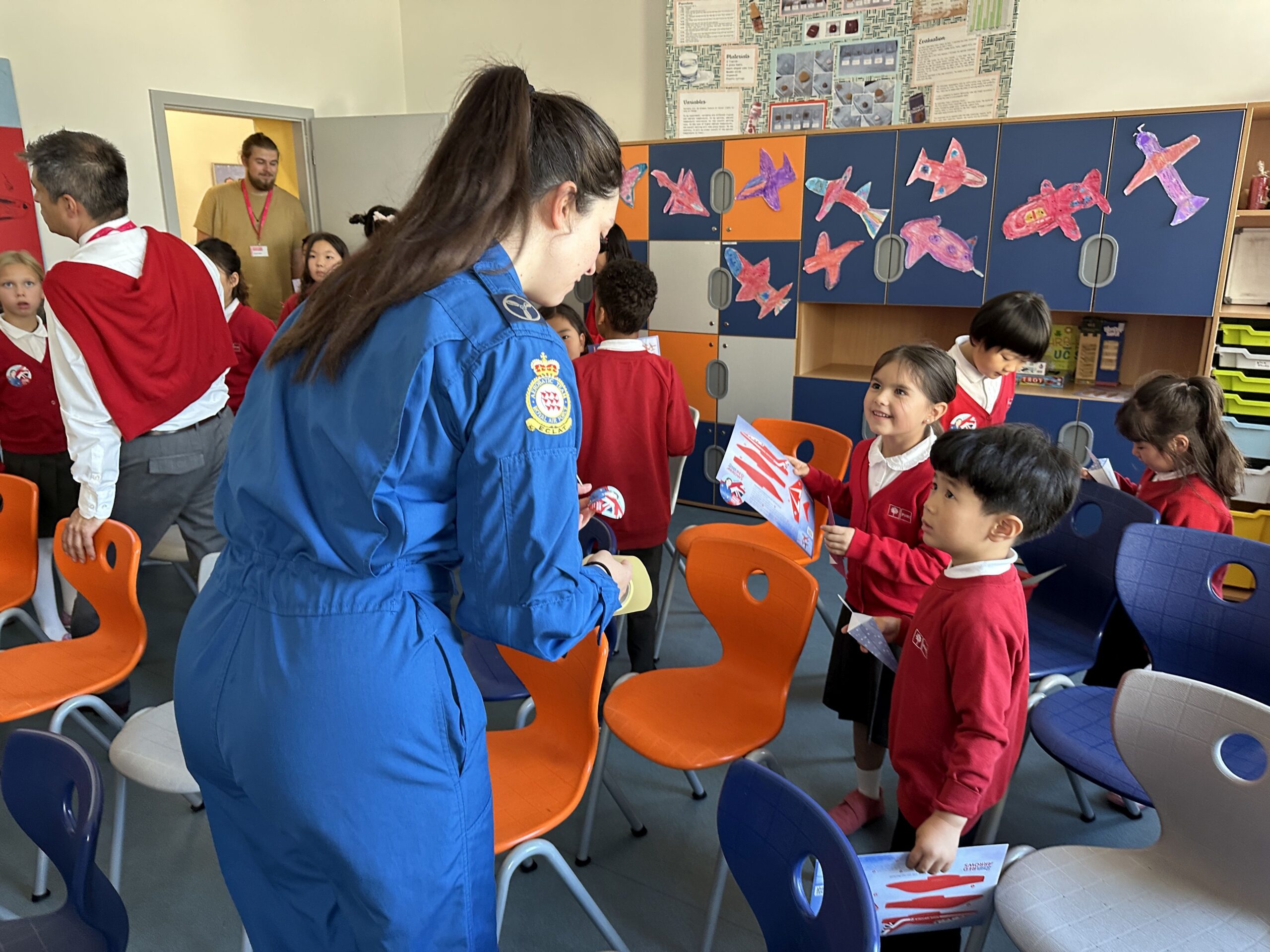
Air Specialist Class 1 (Technician) Lilly Holford spoke to the children about her journey from school to the Red Arrows. She had always enjoyed technology and science lessons but didn’t want to spend years at university, she wanted to go and do something with her life. With the Red Arrows, she is responsible for loading the chemicals which make the smoke but her regular job involves maintaining and fixing the complex electronic computer and radar systems on Royal Air Force aircraft.
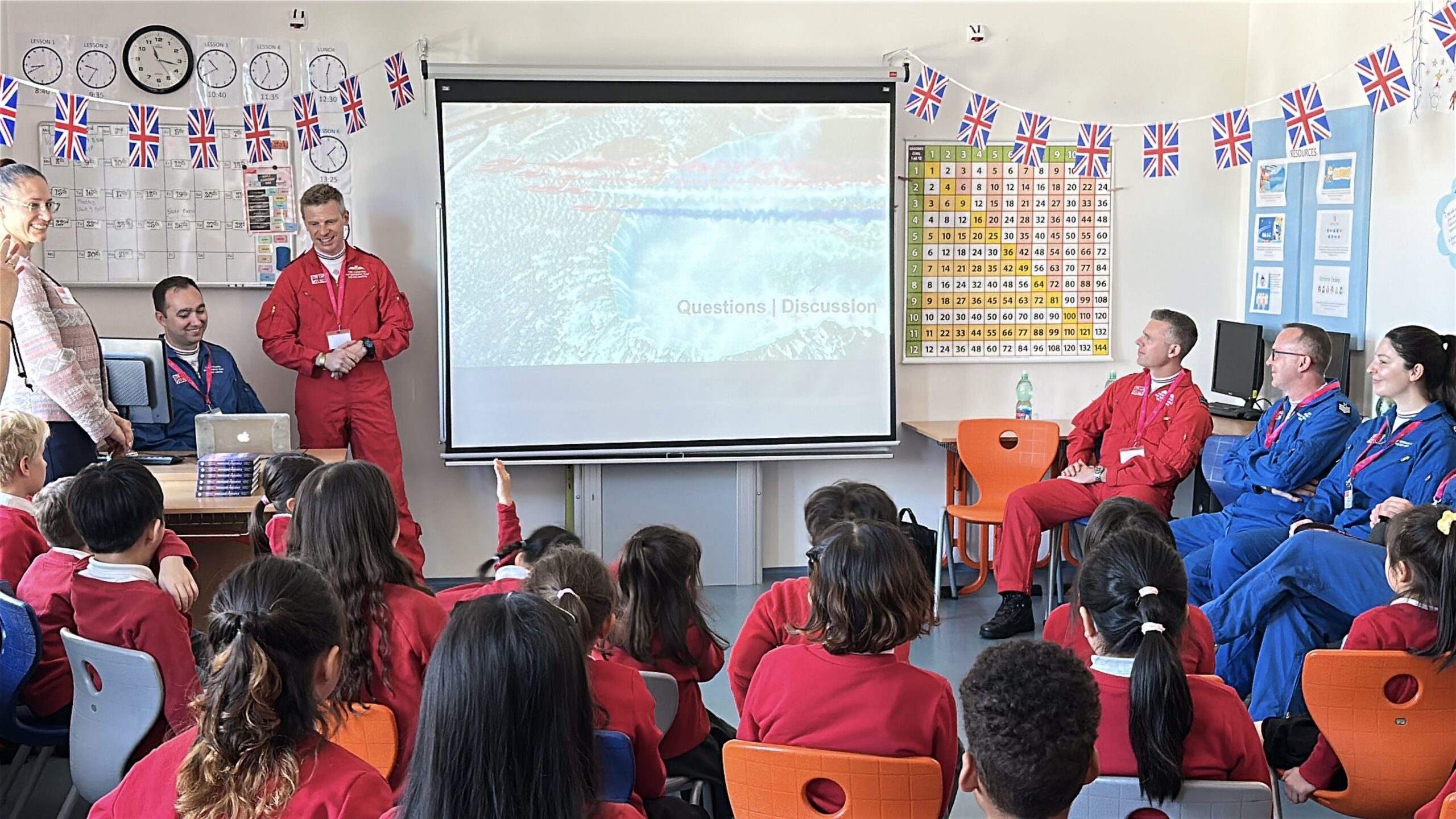
Air Specialist Class 1 Emily Muir is the team’s photographer. She always liked art, and studied photography. She not only takes photos of the displays for publicity but also videos them for safety. After every display, the whole team watch her videos and discuss whether there are ways to improve the performance or increase safety. She also gets to make videos from the back seat of a Red Arrows aircraft during aerobatics. When the children asked her what that was like, she said, ‚Imagine the wildest rollercoaster in the world, but more! I can’t describe it!‘
All too soon, it was time for them to leave because they were preparing for their display at NATO Days. Like the great ambassadors they are though, they left us with a legacy. They showed us that whatever you do in life, if you do it with a passion and always strive to improve, you can achieve extraordinary things. You can have a fulfilling career doing something which can have a positive impact on other people’s lives and it’s not always necessary to go to university to do it. In fact, you may get a better, more up to date education by doing what you love than you would by going to university!
Above all, they left us with inspiration. Many of our pupils went to NATO Days and saw their breath-taking display (and in case you missed it, you can see some of it here). Now they know that it was created through dedication, teamwork and a desire to always be better than before. We have the inspiration for many, many STEM projects which will develop over the coming months and now the children have an example of where their learning can take them.
Maybe we could adopt the motto of the Red Arrows – Eclat, meaning a brilliant display or effect.
Or perhaps we will look to the motto of Royal Air Force for higher inspiration – Per ardua ad astra; “Through adversity to the stars.“